Razi Cov Pars: An Iranian Innovation Reflected in the Future of Mucosal Vaccines
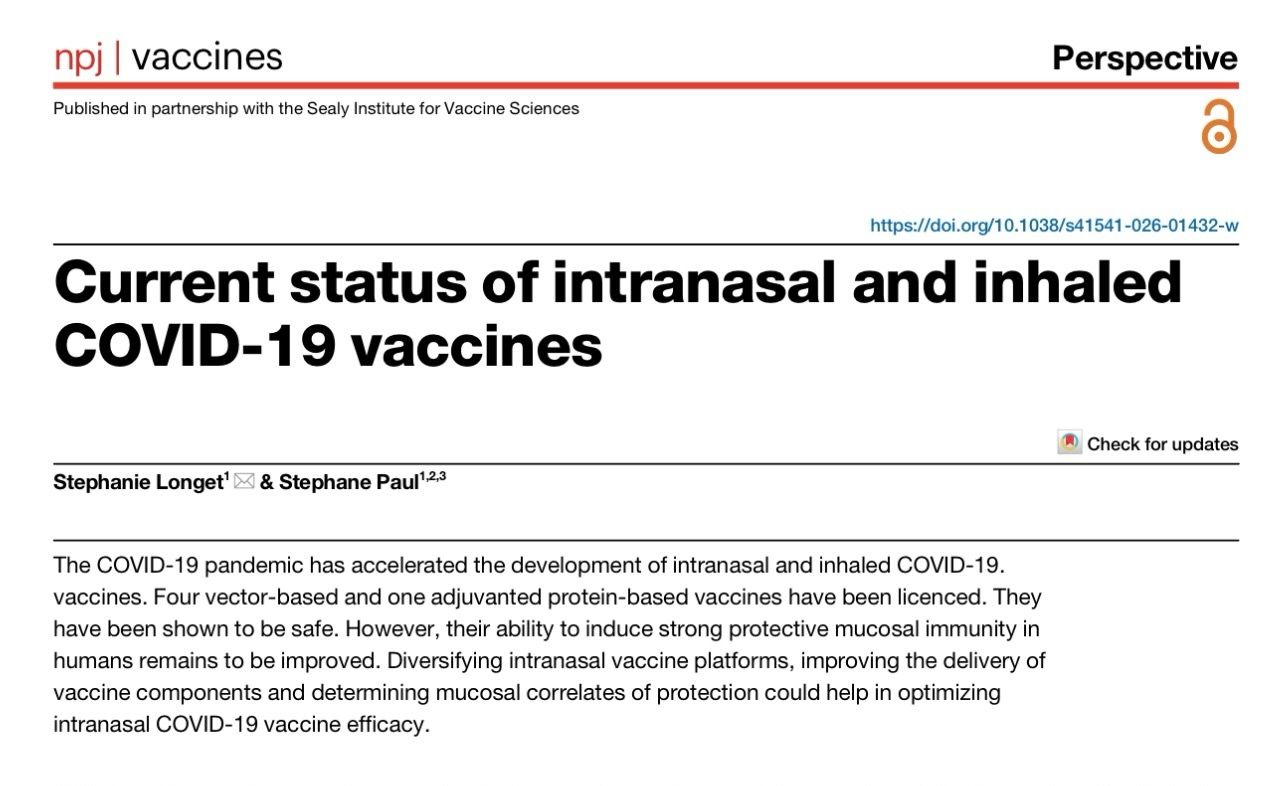
A recent article published in npj Vaccines, titled “Current status of intranasal and inhaled COVID-19 vaccines,” reviews the development of next-generation mucosal vaccines and highlights the importance of diversified vaccine platforms, mucosal immunity, and innovative delivery systems.
The review also discusses Razi Cov Pars (RCP) as a protein-based COVID-19 vaccine incorporating an intranasal route of administration. The recombinant protein vaccine combines spike antigens with the RAS-01 adjuvant system and represents one of the approaches developed toward mucosal vaccination during the COVID-19 pandemic.
The development of Razi Cov Pars was supported by a series of preclinical and clinical studies and by the development of vaccine technology within Iran. Its safety and immune responses have been investigated across different experimental models, while clinical studies have provided evidence regarding its performance in preventing symptomatic COVID-19.
The significance of this experience extends beyond a single vaccine product. Razi Cov Pars represents an example of the integration of research, technology development, product development, clinical evaluation, and domestic vaccine manufacturing capacity in Iran.
At the same time, renewed international interest in mucosal vaccines demonstrates that the next generation of vaccination technologies is increasingly exploring diversified platforms, innovative delivery approaches, and strategies capable of generating effective immune responses at mucosal sites.
Within this context, the Razi Cov Pars experience can be viewed as part of Iran’s scientific and technological capacity in the development of next-generation vaccines. Sustaining such capacity requires continued investment in research and development, preservation of technological know-how, strengthened infrastructure, and stronger connections between science, industry, and health policy.
Scientific innovation becomes a lasting legacy when knowledge is transformed into technology, products, and sustainable capacity within the vaccine ecosystem.